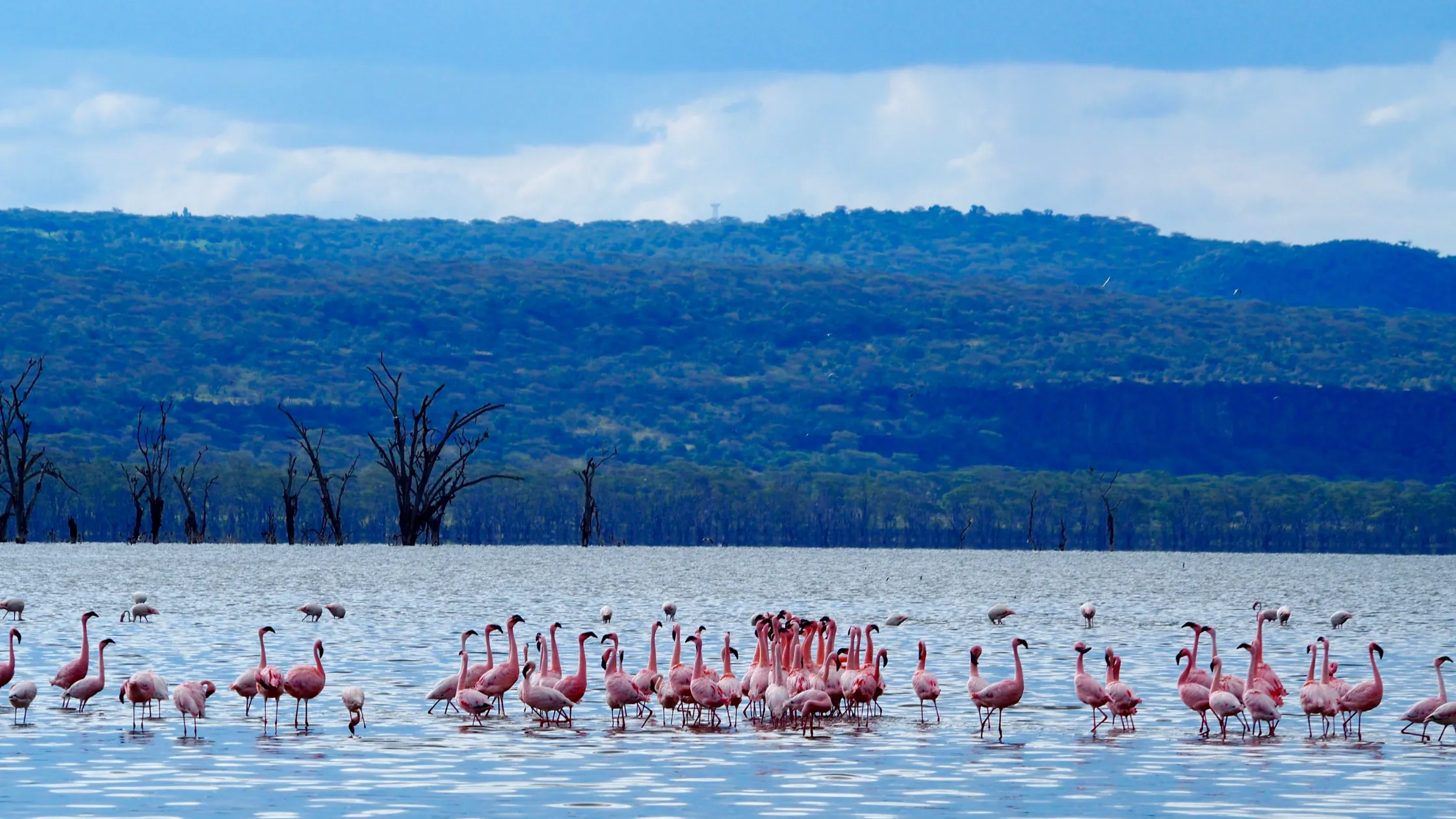
Stand on Baboon Cliff early in the morning and the lake spreads out below you like sheet metal, with a pink smudge along one shore if the water and the algae are kind that month. Behind you, a fenced sanctuary holds one of the best places in Kenya to see rhinos at close range. That is Lake Nakuru National Park: small, steep in places, and packed with wildlife.
It also has a story most guides skip. The flamingos that made the park famous have been unpredictable for years, so it pays to know what you are really going to see before you book.
Quick Answer: Lake Nakuru National Park covers 188 km² and sits about 156 km northwest of Nairobi, roughly 2.5 hours by road. Its strongest draw today is the rhino sanctuary, home to roughly 100 white and black rhinos. Flamingos come and go with the water. A non-resident adult pays USD 90 for 24 hours. Go for a long day trip, or better, stay one night.
Quick Facts
| Size | 188 km² |
| Elevation | About 1,754 m above sea level at the lake |
| Nearest town | Nakuru, with the Main Gate about 4 km out |
| From Nairobi | About 156 km on the A104, roughly 2.5 hours |
| Gates | Main Gate, Lanet Gate and Nderit Gate |
| Opening hours | 6:00 am to 6:00 pm daily |
| History | Bird sanctuary in 1961 (southern tip), whole lake by 1964, national park in 1968 |
| Rhino sanctuary | Set up in 1987, Kenya’s first government-managed rhino sanctuary |
| Designations | Ramsar wetland (1990), part of the Kenya Lake System World Heritage Site (2011) |
| Birds recorded | About 450 species |
Sources: Kenya Wildlife Service and Wikipedia.
Why Is Lake Nakuru National Park Famous?
Lake Nakuru National Park is famous for two things: huge flocks of flamingos feeding on the shallow soda lake, and a fenced sanctuary that protects both black and white rhinos. Add leopards, Rothschild’s giraffes and 450 bird species inside 188 km², and you get a compact park that is easy to cover.
The park began as a bird reserve. KWS records the southern tip of the lake as a bird sanctuary in 1961, the whole lake in 1964, and full national park status in 1968, with an electric fence added in 1986 and the rhino sanctuary following in 1987.
Size is the other selling point. You can see a lot here in a single day, which is why Lake Nakuru works so well as a first stop out of Nairobi or a quick add-on to a Maasai Mara trip. The catch is that “compact” does not mean “flamingos guaranteed.” More on that next.
Can You Still See Flamingos at Lake Nakuru in 2026?
Sometimes, yes, but not reliably. Flamingo numbers at Lake Nakuru have fallen from the old figures of a million or more to flocks that visitors now describe in the tens of thousands, and they shift between Nakuru, Lake Bogoria and Lake Elementaita as water and algae change.
The reason is the lake itself. Water levels have been rising since about 2010, and Wikipedia notes the lake grew from roughly 40 km² to 68 km² between 2010 and 2020. A satellite study covered by Africa Geographic found Nakuru’s flamingo food (phytoplankton) fell by about half while the lake grew by 91%. Diluted water means less algae, and less algae means fewer birds.
Both lesser and greater flamingos use the lake. The lesser flamingo is the smaller, deeper-pink bird that forms the famous shoreline carpets, and it is listed as near threatened.
Our honest advice: treat the flamingos as a bonus and the rhinos as the main event. If flamingos are your top priority, ask us to check recent sightings a week before you travel. Bogoria, about two hours north, sometimes holds denser flocks, and we can add it to your route.
How Many Rhinos Live in the Lake Nakuru Rhino Sanctuary?
Lake Nakuru holds an estimated 100 rhinos: roughly 70 southern white rhinos and 25 to 30 eastern black rhinos. These are estimates that move with births and KWS translocations, and KWS does not publish a fixed park figure on its visitor page.
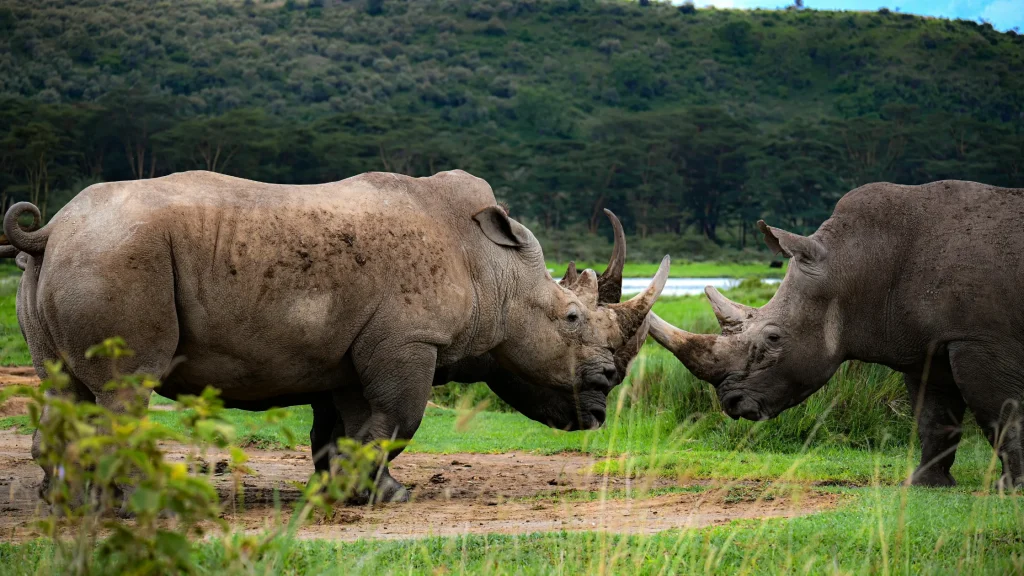
That makes it one of the most dependable places in Kenya to see white rhinos, which graze in open grassland and are usually easy to spot from your vehicle. Black rhinos are shyer and favour thicker bush, so dawn and dusk give you the best odds. Rangers keep a buffer of about 50 metres around rhinos, and your driver-guide will respect it.
Context helps here. Kenya’s 2025 national wildlife census recorded 2,102 rhinos nationwide, made up of 1,059 black rhinos and 1,041 southern white rhinos, up from 1,812 in 2021. Sanctuaries like Nakuru are a big reason the numbers are climbing.
What Else Will You See at Lake Nakuru?
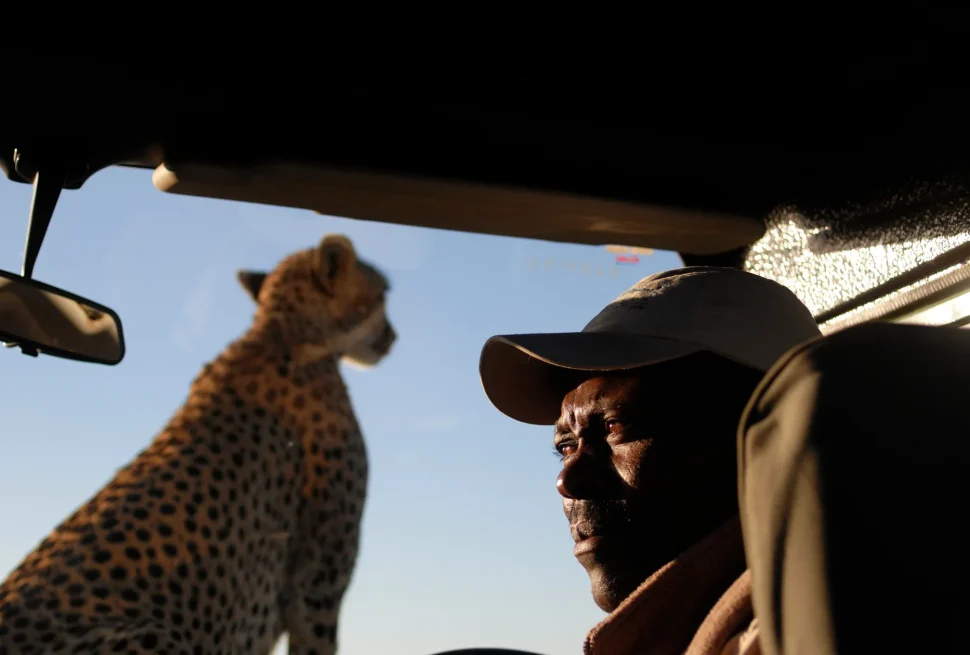
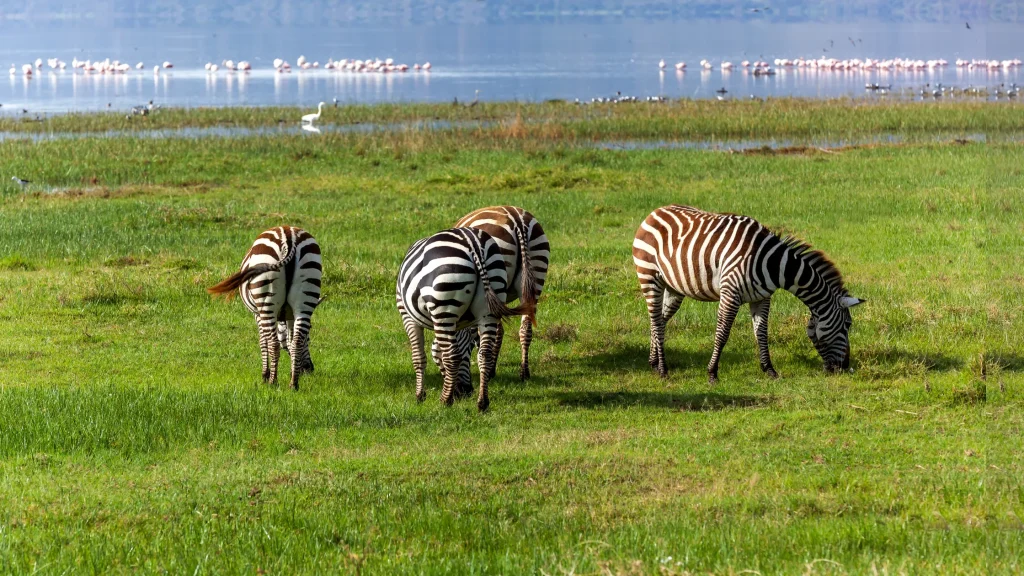
Beyond rhinos and flamingos, expect Rothschild’s giraffes, buffalo, waterbuck, zebra, hippos and a healthy lion population. Leopards live here too, and Baboon Hill is a traditional place to look. There are no elephants.
Lions sometimes lie in the branches of acacia trees, and the western side near Lanet often has buffalo herds. Leopard sightings are a pleasant surprise, not a promise.
Birders have plenty to do even when the flamingos are thin. Great white pelicans, cormorants and African fish eagles are regulars, and migrant birds add to the list in the wetter months. With about 450 species recorded, the park suits our birdwatching safaris well.
Where Are the Best Viewpoints at Lake Nakuru?
Baboon Cliff is the classic viewpoint, with a wide panorama over the lake and its flamingo shoreline. Out of Africa Lookout and the slopes near Lion Hill give you alternative angles. Go in the early morning or late afternoon, when the light is soft and the haze is lowest.
- Baboon Cliff. Best at sunrise or the last hour before the gates close. A wide-angle lens covers the view, and a 200 to 400 mm lens picks out birds on the shore. Baboons here are bold, so keep food out of sight and car doors shut.
- Out of Africa Lookout. Another lake panorama from the escarpment, and a useful second stop if Baboon Cliff is busy.
- Lion Hill. Home to a lodge with lake views, and a handy base for early starts.
- Southern lakeshore and Naishi plains. The open grassland where white rhinos and zebra graze. Stay in the vehicle, switch off the engine and let the animals settle.
A good routine is Baboon Cliff early, then the plains and the shoreline, then a second look at the cliff in the afternoon.
Things to Do at Lake Nakuru National Park
Game drives are the main activity, followed by birdwatching, photography and picnics at designated sites. A full circuit takes about three to four hours at a relaxed pace, longer if you stop for rhinos or birds.
- Game drives (3 to 5 hours). Most roads in the main loop are fine for a standard car in dry weather, but a 4×4 is safer after rain.
- Birdwatching (2 to 4 hours). A specialist guide changes the day completely. Ask us to arrange one.
- Picnics and short stops. KWS lists scenic viewpoints and picnic sites. Use the designated ones only.
- Makalia Falls. The waterfall is one of the park’s quieter attractions, and the Makalia campsite sits nearby. Follow KWS guidance on walking, and take a ranger if one is required.
- Nakuru town. Craft markets and local cafes make a good half-day if you stay overnight.
How Far Is Lake Nakuru From Nairobi?
Lake Nakuru National Park is about 156 km northwest of Nairobi on the A104, and the drive takes roughly 2.5 hours in decent traffic, closer to 3 when the road is busy. Leave before 6 am to beat the Nairobi and Rironi congestion.
Road works are the wildcard. The Rironi to Nakuru to Mau Summit highway was flagged off for dualling in November 2025, so expect diversions and slow patches that can add time.
Three steps by road:
- Leave Nairobi on the A104 through Rironi, then past Naivasha.
- Continue to Nakuru town and follow signs to the park.
- Pick the gate: Main Gate (about 4 km from town), Lanet Gate or Nderit Gate.
A note on gates. Rising water swamped the area around the Main Gate in recent years, and KWS has shifted access around. Confirm which gate is best on the day you travel, and treat Lanet as a reliable fallback.
By air. The Naishi airstrip inside the park is serviceable for light aircraft, but almost everyone drives, and we can arrange a private vehicle and driver-guide for you.
Self-drive or guided? A standard car manages the main loop in dry weather. A guide earns their fee finding the rhinos, reading the road and avoiding closed tracks. If you want one stress-free day, book a driver-guide.
How Much Does Lake Nakuru National Park Cost?
A non-resident adult pays USD 90 per 24 hours and a child pays USD 45, according to KWS. East African citizens pay KES 1,500 for adults, and Kenya residents pay KES 2,025. Vehicle entry is charged separately.
| Visitor | Adult | Child |
|---|---|---|
| Non-resident | USD 90 | USD 45 |
| African citizen (non-EAC) | USD 50 | USD 25 |
| Kenya resident | KES 2,025 | KES 1,050 |
| East African citizen | KES 1,500 | KES 750 |
Source: KWS Lake Nakuru page.
Private cars pay about KES 600 per entry and larger vans about KES 1,500, based on operator listings. A public campsite runs about USD 30 per person per night.
Payment is cashless through the KWS online system (eCitizen/KWSPay), and you should pay before you arrive because gate signal can be weak. KWS introduced a new tariff from October 2025, and parts of it have faced court challenge, so rates can move. Confirm current fees at booking. If you travel with us, we handle park fees and give you the final figure up front.
Where to Stay Near Lake Nakuru
Stay inside the park if you want sunrise at Baboon Cliff without the early drive. Staying in Nakuru town costs less but adds a gate queue each morning. Price bands below are indicative and should be confirmed.
- Sarova Lion Hill Game Lodge (mid to upper range, about USD 150 to 220 per person full board). On the escarpment with lake views. Good for couples and families.
- Lake Nakuru Lodge (mid-range, about USD 130 to 180 per person full board). Inside the park, with easy access to the shoreline.
- Flamingo Hill Tented Camp. A boutique tented camp near the Main Gate.
- Mbweha Camp (about USD 120 to 170 per person full board). Near the park’s western boundary, with a quieter feel.
- KWS accommodation and campsites. Naishi Guest House, Mbugani Homes and public or special campsites suit budget travellers and self-caterers.
- Nakuru town hotels such as Merica or Midland, roughly USD 40 to 90 a night, if you want the lowest-cost base.
If you are combining parks, a night at Lake Naivasha or Elementaita also puts you within easy reach. See our Lake Naivasha and Crescent Island guide.
When Is the Best Time to Visit Lake Nakuru?
The best time for game viewing is the dry months, January to March and June to October, when roads are firm and animals gather near water. The wetter months, April to May and November to December, are greener and quieter, with more migrant birds but muddier tracks.
- January to March. Dry, dusty and good for rhinos and big mammals. Flamingos are often cited as strongest in January and February, though that is less dependable now.
- April to May. The wettest stretch. Better value and quiet, but some tracks turn to mud.
- June to October. Cool, dry and popular. A strong all-round window for wildlife.
- November to December. The short rains bring green landscapes, newborn animals and migrant waders. Check road conditions before you go.
We would pick July to September or January to February for a first visit. Weekdays and early starts are your best defence against crowds.
Day Trip or Overnight: Which Is Better?
An overnight is better, because it lets you catch both sunrise and sunset at Baboon Cliff without a 5 hour round trip in between. A day trip works well if you only have a day, as long as you leave Nairobi before 5:30 am.
Day trip from Nairobi (best for families and short stays)
- 05:00 Leave Nairobi.
- 08:00 Reach the gate and head straight to Baboon Cliff.
- 09:30 to 13:00 Drive the shoreline and the rhino grounds.
- 13:00 Picnic at a designated site.
- 14:00 to 16:00 Second game drive and a last look from the cliff.
- 16:30 Leave for Nairobi, arriving in the evening.
Two-day overnight (best for photographers)
- Day 1: Arrive by midday, check in and take an afternoon drive.
- Day 2: Sunrise at Baboon Cliff, a full morning loop, optional Makalia Falls stop, then depart after lunch.
Three-day Rift Valley loop. Combine Lake Nakuru with Naivasha or Elementaita, and move on to the Maasai Mara. Our 6-day family getaway through Amboseli, Lake Nakuru and Maasai Mara and 7-day Kenya classic safari both include it.
Pack binoculars, layers (mornings are cool), sun protection and a refillable water bottle.
Conservation and Responsible Visiting
The rhino fence exists for one reason: poaching. KWS built the fence and set up the sanctuary to protect black rhinos, and rangers patrol the park. Entry fees help pay for that work.
The bigger long-term threat is the water. Rising water has flooded roads, offices and parts of the shoreline, and a 2024 court order directed officials to address discharges from the local water treatment facility affecting the lake basin.
You can help by staying on marked roads, keeping your distance from rhinos, taking all litter out, and choosing operators that follow KWS rules. If you want to go further, our community-based tourism guide shows how to support local conservation through your trip.
Is Lake Nakuru Safe, and What Are the Rules?
Lake Nakuru is a safe, well-managed park if you follow KWS rules. Stay in your vehicle except at designated spots, never feed wildlife, keep windows up around baboons, and leave before the 6 pm gate closing.
- Wildlife. Do not approach rhinos or buffalo. Do not leave food in an open vehicle, because baboons will take it.
- Health. The park sits at about 1,754 m, so the sun is strong and the mornings are cool. Bring sunscreen, a hat and bottled water. Check current malaria and vaccine guidance with a travel-health authority before you fly.
- Payment and signal. Pay online beforehand. Mobile signal can be patchy inside the park.
- Emergencies. Save the KWS and Nakuru hospital numbers before you go, and confirm them on the KWS website.
For more first-time advice, read our 14 essential Kenya safari tips and our guide to things to do in Kenya.
Frequently Asked Questions
How far is Lake Nakuru from Nairobi?
About 156 km by road on the A104. The drive normally takes 2.5 to 3 hours, depending on traffic and road works around Rironi.
What is the best time to see flamingos at Lake Nakuru?
Flamingo numbers depend on water level and algae, so there is no guaranteed month. January to February and June to October are often better, but check recent sightings before you travel.
Can I drive around Lake Nakuru in a normal car?
Usually yes, in dry weather. The main loop suits a standard car, but muddy sections after rain are easier in a 4×4. Check conditions with KWS.
How much is the entrance fee for Lake Nakuru National Park?
KWS lists USD 90 for non-resident adults and USD 45 for children per 24 hours. East African citizens pay KES 1,500 and Kenya residents KES 2,025. Vehicle fees are extra.
How many rhinos are in Lake Nakuru National Park?
Roughly 100, including about 70 white rhinos and 25 to 30 black rhinos. These are estimates that change as KWS moves animals and births occur.
Are there elephants at Lake Nakuru?
No. The park has rhinos, lions, leopards, buffalo, giraffes and many birds, but no elephants. For elephants, add Amboseli or the Maasai Mara.
Is Lake Nakuru worth visiting if the flamingos are away?
Yes. The rhino sanctuary, Baboon Cliff, leopards, giraffes and 450 bird species are strong reasons on their own.
How long do I need at Lake Nakuru?
One long day covers the highlights. One night lets you do both sunrise and sunset drives, which we recommend.
Can I visit Lake Nakuru and the Maasai Mara on the same trip?
Yes. Lake Nakuru fits neatly between Nairobi and the Mara, usually with a night at Naivasha or Nakuru.
Plan Your Lake Nakuru Trip With Sureway
Tell us your dates, who is travelling and what you most want to see, and we will build the day trip or overnight around you, including a flamingo check closer to your travel date. Request a free, no-obligation quote, or see our Lake Nakuru National Park destination page for current trips.